Home care work: what a shift is actually like, and how people get in
The schedule that looks like thirty hours is often twenty-two paid hours spread across forty hours of your day. That gap is the job's real shape.
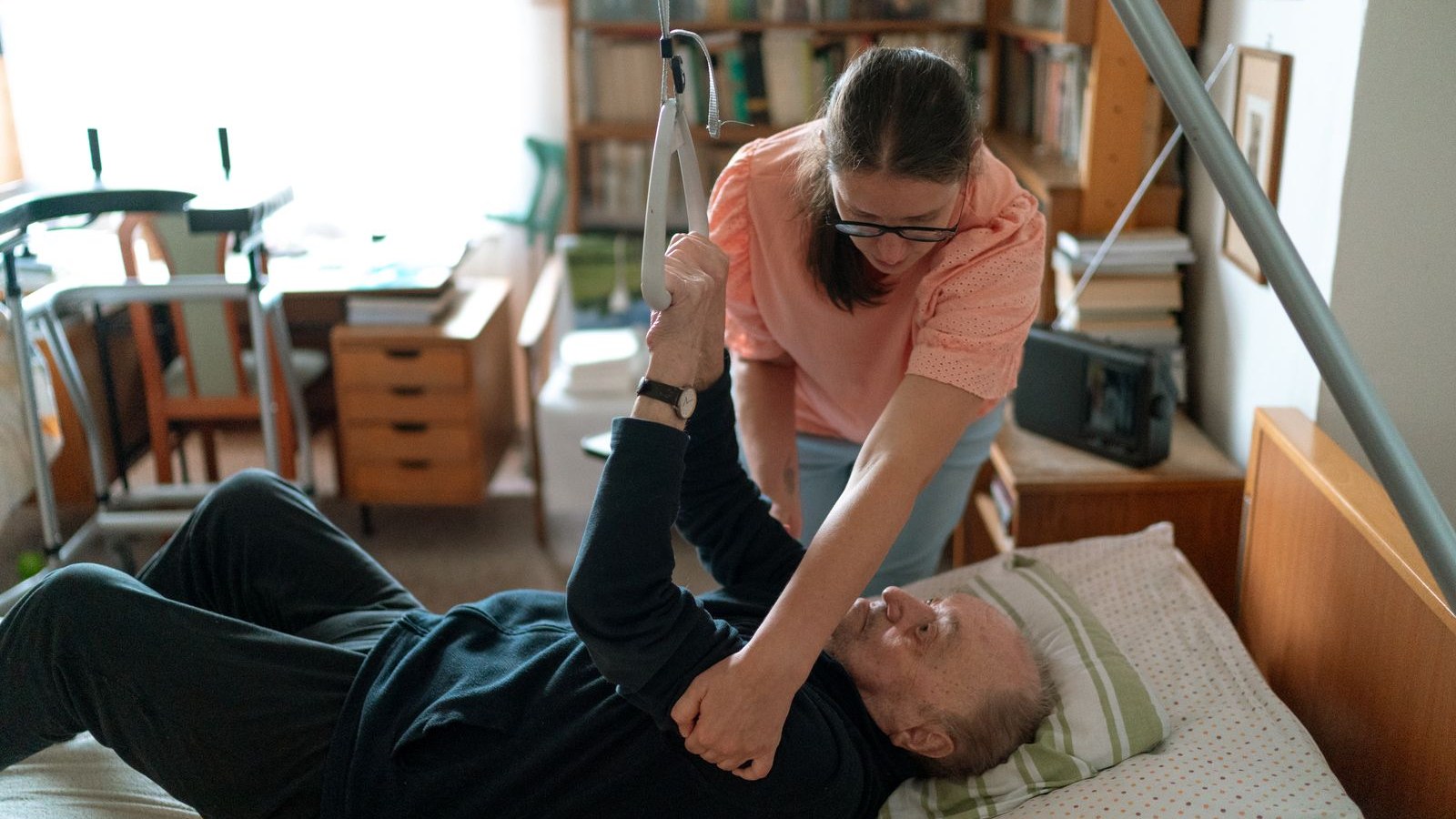
People coming into home care expect the medical part to be the hard part. It rarely is. The tasks are learnable in a week, and the state draws a tight line around what you may do.
The hard part is working alone in somebody else's house, on a schedule assembled out of short visits, with a supervisor you see once a month.
A shift, hour by hour
6:40 Park outside the first client's house. Open the app, read the care plan and the weekend aide's note. Most agencies clock you in by phone, app location or the client's landline.
7:00 Transfer from bed, toilet, shower or bed bath, dressing. The heaviest twenty minutes of the day, and why transfer technique dominates orientation. You watch skin while you work: the note about a reddened heel is the one that gets read.
7:45 Breakfast. Medication reminders, not administration, unless your state and certification say otherwise. That line is real and enforced.
8:30 Light housekeeping, limited to the areas the client uses. Bed changed, laundry, dishes, trash. The plan says what is included; families ask for more, and that answer comes from your supervisor.
9:15 Documentation: tasks completed, anything that changed, anything the family said. Then a drive across town, which may or may not be on the clock.
10:00 Second client, a companion case. Groceries, a ride to a clinic appointment, sitting with someone who wants to talk about a person who died in 1994. No physical load, and no attention left over.
12:00 Lunch prepared and eaten, dishes, water within reach, afternoon medications set out if the plan allows. Then documentation, confirm the next visit, clock out. Six hours of your day, five of them paid.
Agency or private hire
An agency takes the payroll, the withholding, the background check and usually workers' compensation. It also takes a cut, which is why the same case pays less through an agency. In exchange: a supervisor, backup when you are sick, someone to call at 3 a.m.
Private hire means the household is your employer. Rates are better and everything else is on the two of you: taxes, coverage, a written agreement, what happens when you have the flu. Many aides work both, and an agency contract may restrict it.
The certification question is a state question
The titles are not interchangeable. A personal care aide, a home health aide and a certified nursing assistant carry different training hours and scopes, all set at the state level. A decent agency will tell you which credential the case needs.
The national number, and what it hides
The 2025 median for home health and personal care aides was $35,800 a year, or $17.21 an hour, per the BLS Occupational Outlook Handbook. One figure covers every arrangement above: agency and private hire, state-funded cases and private-duty ones.
It is a national median, so half the aides counted earned less, and the figure moves hard by state and by metro. Two aides doing identical transfers ninety minutes apart on a map can sit a dollar or more an hour apart, because the funding rate behind the case is set locally.
So read it as the middle of a wide band. Pay follows the credential and the funding: state-program cases sit near the bottom of an agency's scale, private-duty and specialty cases above it, and overnight and weekend visits carry a differential.
Ask about the gaps, not the hours
Add up the clock time from the first visit's start to the last visit's end, then compare it with the paid hours. The difference is the part of your day the job takes without paying for it, and the usual reason people quit early.
The load, said plainly
Physically: transfers, lifting, bending over a low bed, standing in a hot bathroom. Backs go. Use the gait belt and say so when a client's needs outgrow what one person can safely do.
Emotionally: you will watch people decline, some clients will die, and you will land in family arguments about money. You will be alone when something goes wrong, and knowing the escalation order in advance makes that survivable.
The clients are not what wears people down. The isolation is, and so is a schedule built out of unpaid gaps.
Questions that reveal the case before you take it
- What credential does this case require, and is training paid for?
- Is travel between clients paid, and mileage reimbursed?
- How many transfers a day, and is there equipment or am I lifting?
- What is the escalation order for a fall, a refusal of care, a hostile relative?
- Who supervises me, and how do I reach them on a weekend?
- If a client cancels, am I paid, and am I offered a replacement visit?
- Is the schedule the same week to week, or does it rebuild every Friday?
Your scope is written down somewhere
Scopes of practice, certification names and training hours are set by states, and differ enough that a credential can fail to transfer across a state line. Read yours once rather than learning it from a coworker, because inside a shift it decides what you may say yes to. Whether travel between clients is on the clock is a wage-hour question for your state labor department, not your scheduler.
The number and its source
The figure above is the 2025 median for home health and personal care aides, published by the U.S. Bureau of Labor Statistics in its Occupational Outlook Handbook. A median is a one-year national snapshot, not what any individual agency or household pays.
General information about work in the United States, not legal, tax, immigration, medical or financial advice. Pay, hours, leave and licensing rules differ by state, by city and by contract, and change over time. Check anything here against your own documents and, for anything you would act on, take advice from a qualified professional in your state. Get in touch with any questions about this post.