Hybrid schedules that hold, and the ones that quietly collapse
A team's hybrid schedule collapses when the office day stops being worth the drive. That is a coverage problem, and tightening the rule makes it worse.
A team's hybrid schedule rarely collapses because someone took liberties with it. It collapses because the office days stopped being worth the drive for the people who kept them, and the usual response, tighten the rule and count badge swipes, lands hardest on exactly those people.
Drift is a coverage problem wearing a discipline costume. A team can usually fix it without a policy, mostly by deciding what the in-office days are for.
An anchor day nobody uses is just a commute
The teams whose arrangements last do not have better attendance rules. They have a reason to be in the room.
An anchor day survives when something on it genuinely needs the building: a new hire's first weeks, a handover between shifts, equipment that only exists on site, the conversation that has gone three rounds in messages, the training everyone keeps deferring. Schedule those onto it deliberately and the day defends itself.
A day carrying nothing but calls people could take from home has a life expectancy of about a quarter. Nobody announces they have stopped coming. They have a reason not to, once, and then twice.
Coverage is what the team actually owes
Nobody above your manager cares which days suit the team. What gets defended upward is coverage: the phone answered, the queue worked, the floor staffed, the customer meeting a person.
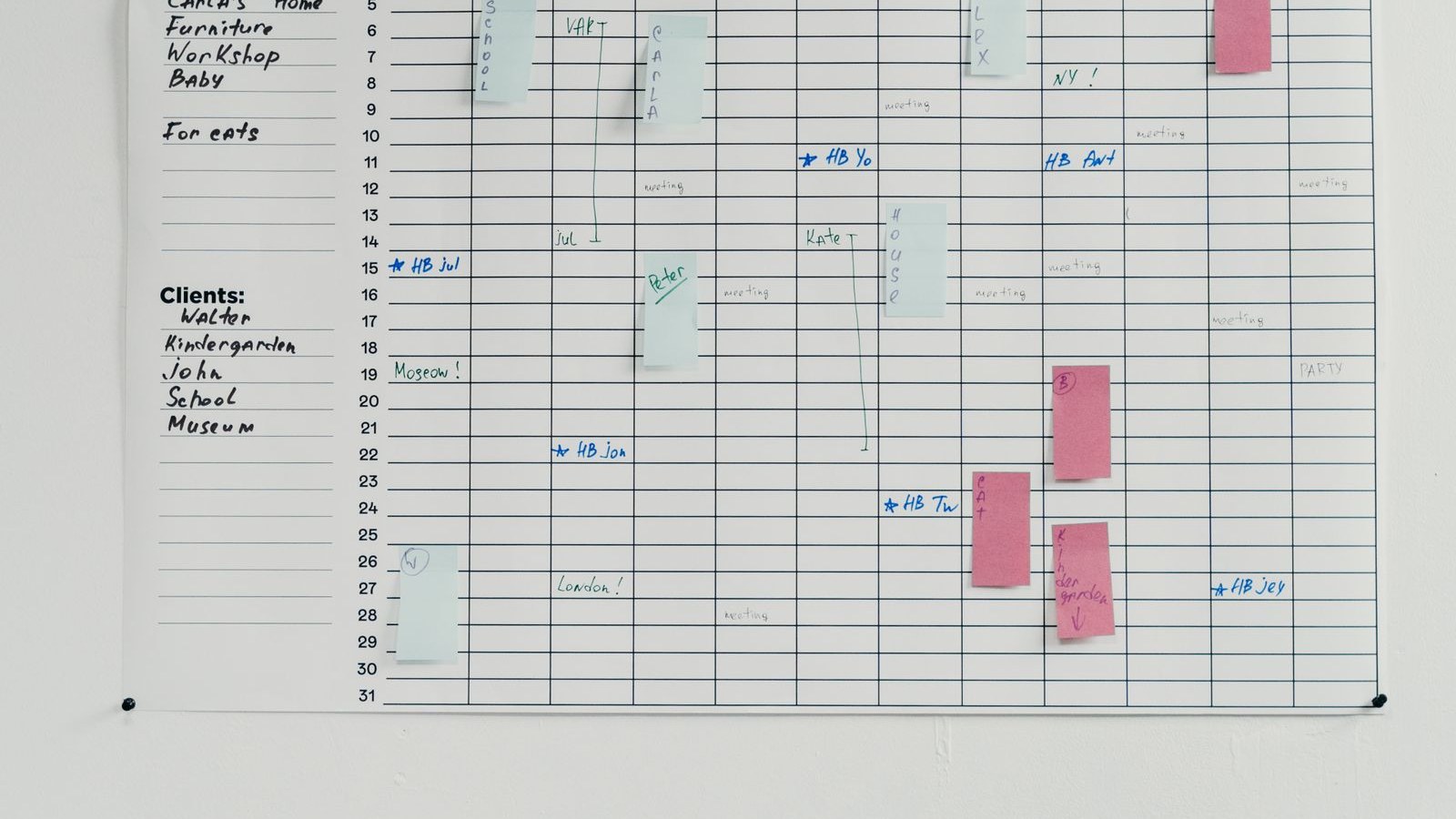
So the unit is not days at home. It is who covers what, on every weekday, by name. Write that out as a grid and most scheduling arguments settle themselves, because the gaps become obvious.
This matters most on a split team, where some roles can work anywhere and some cannot leave the building. A schedule that reads as a benefit for one half and a rota for the other sours faster than any policy can absorb. Name what the remote half owes the on-site half: a response time, an escalation owner, an agreement to take the awkward calls.
When half the team has drifted
By the time someone says attendance is uneven, the pattern is usually this. The people still coming in are the ones whose work needs the room. The ones who stopped are the ones whose work never did. That is one group with a reason and one without, not two kinds of people.
Before anybody proposes a rule, put four questions on the table out loud, in a meeting that has this as its only item:
- What happened on the last three anchor days that could not have happened from home? If the honest answer is nothing, the day is the problem and the people are not.
- Who is missing on those days, and what would have to be scheduled for them to come? Ask them directly rather than discussing them.
- Where has coverage actually failed in the past month? Name incidents, not impressions. There are usually fewer than people think, and they cluster.
- What are we willing to move? The day, the meetings, the coverage owners, or nothing. If it is nothing, the conversation is finished and the drift continues.
Fix the day before you fix the people
Almost every hybrid schedule that stopped working lost its content before it lost its attendance. Move the work that needs the room back onto the anchor day and give it a month before anyone raises compliance. Attendance rules applied to an empty day produce resentment, then a full parking lot.
Meeting gravity pulls people back in
Recurring meetings migrate onto remote days, and nobody does it on purpose. Someone needs a slot, the remote day is the only clear one, two people come in because it goes better in person, and within a month that day is understood to be flexible. Then attendance looks uneven, and the arrangement gets tightened for everyone, including the people who never moved.
The counter is agreed once, while it is hypothetical and costs nothing: a new recurring meeting does not land on a remote day. If one has to, the team moves the day rather than making an exception to it. Exceptions do not stay singular.
Surviving a manager change
Most arrangements die in the first month under a new manager, and rarely from hostility. They inherit a team, see a half-empty floor on a Wednesday, and cannot tell whether that was agreed or drifted into.
So the schedule has to live where a stranger finds it without being told it exists. Not a message thread. The shared calendar description, the team page and the onboarding checklist, all three saying the same thing, dated.
A schedule that lives only in one manager's memory has an expiration date, and the date is whenever that manager changes jobs.
When a new manager arrives, send it in their first week as a description of how the team runs, not as something to approve. They can change whatever they decide to change. What you are ruling out is changing it by accident.
Who owns which part of this
The team owns the pattern and the meeting rule. Your manager owns the override, and is the only person who can defend the arrangement upward, so they have to be able to describe it without you there.
Above that it stops being the team's to settle. Where a union contract covers hours or work location, the schedule is bargained rather than arranged, and your representative is the route.
For the on-site half of a split team, advance-notice scheduling rules exist in a small number of states and cities, setting how much warning a schedule change requires. Those are not the team's to trade away, whatever everyone agrees to in the room.
General information about work in the United States, not legal, tax, immigration, medical or financial advice. Pay, hours, leave and licensing rules differ by state, by city and by contract, and change over time. Check anything here against your own documents and, for anything you would act on, take advice from a qualified professional in your state. Get in touch with any questions about this post.